
Ayurvedic Havan Ingredients and Their Benefits
- संस्कृत का उदय

- May 30
- 3 min read
Ayurvedic Havan Ingredients and Their Benefits
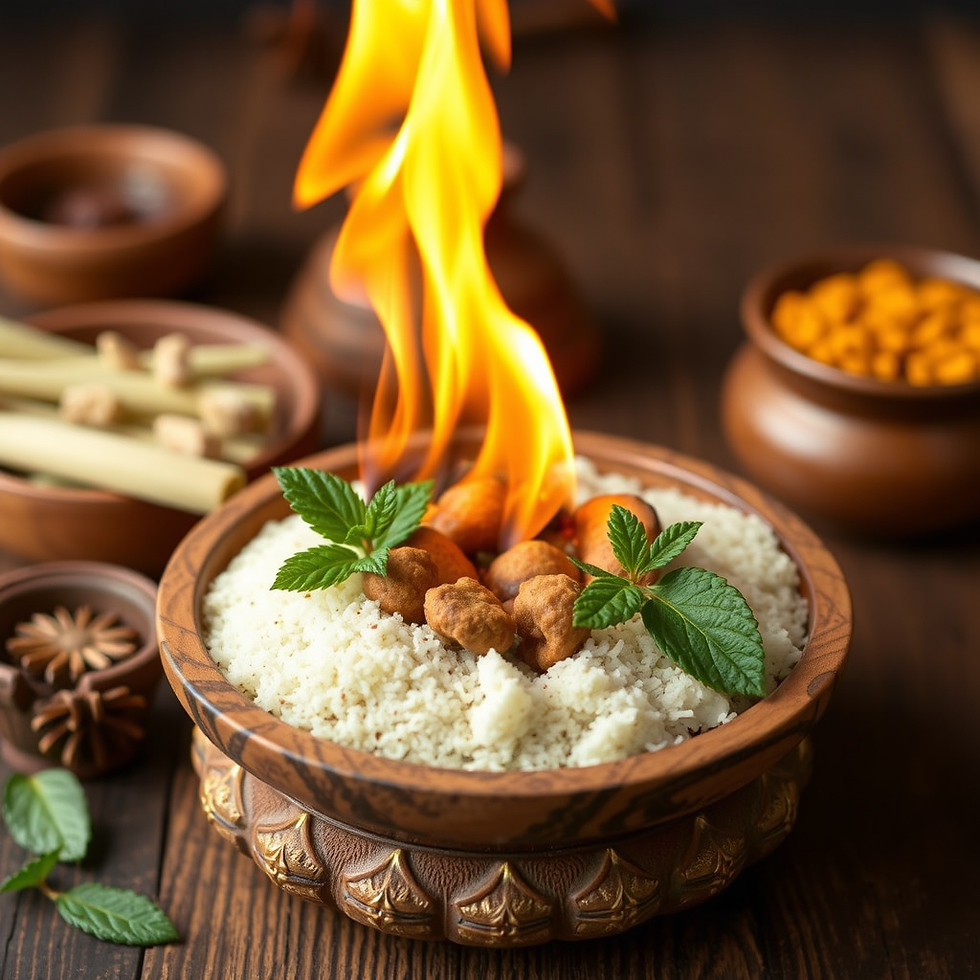
It is difficult to describe all medicinal herbs in complete detail; however, some of the most important herbs used in Ayurvedic Havan (sacred fire offerings) are summarized below. Traditionally, these herbs have been used in various forms. When offered into the fire, their volatile oils and aromatic compounds are released into the atmosphere. Ayurveda describes fumigation (Dhoopana) as a practice that may support respiratory health and help purify the environment. Classical Ayurvedic texts such as the Charaka Samhita, Ashtanga Hridaya, Bhavaprakasha, and other traditional works mention various herbal fumigation and Havan formulations.
Important Herbs and Their Traditional Properties
1. Kulinjan (Greater Galangal)
Traditionally regarded as beneficial for cough and excess mucus (Kapha). It is considered a voice enhancer, mouth cleanser, digestive stimulant, and is described as bitter, warming, and astringent. It has been traditionally used for digestive disorders and abdominal discomfort.
2. Vidanga (Embelia ribes)
Considered sharp, warming, and digestive in nature. Traditionally used for abdominal pain, bloating, intestinal disorders, and balancing Vata-related conditions.
3. Tumburu (Zanthoxylum armatum)
Traditionally known for stimulating digestion and appetite. It has been used for head-related ailments, heaviness, intestinal worms, loss of appetite, and respiratory complaints.
4. Yashtimadhu (Licorice Root)
Cooling, nourishing, and pleasant in taste. Traditionally considered beneficial for the eyes, strength, complexion, blood disorders, vomiting, and respiratory weakness.
5. Chirayata (Swertia chirayita)
Traditionally regarded as a mild laxative, cooling, and light herb. Used in Ayurvedic practice for fever, cough, mucus disorders, swelling, and intestinal worms.
6. Indrajau (Kutaja Seed)
Traditionally described as balancing all three doshas (Vata, Pitta, and Kapha). Commonly used for digestive disturbances, diarrhea, fever, blood-related disorders, and skin conditions.
7. Rasna (Pluchea lanceolata)
Known in Ayurveda as a digestive and Vata-Kapha balancing herb. Traditionally used for swelling, joint discomfort, abdominal disorders, cough, fever, and various Vata-related ailments.
Considered appetite-enhancing and digestive. Traditionally used for respiratory conditions such as cough and breathing difficulties, as well as Vata-related disorders.
9. Kushta (Saussurea lappa)
A warming, bitter, and aromatic herb traditionally valued for supporting vitality. Used in Ayurvedic formulations for skin disorders, Vata imbalance, and Kapha conditions.
10. Pushkarmool (Inula racemosa Root)
Traditionally used for Vata- and Kapha-related fever, swelling, poor appetite, cough, and discomfort in the chest or ribs.
11. Kakad Singhi (Pistacia integerrima Gall)
Traditionally considered warming and bitter. Used in Ayurvedic practice for cough, fever, hiccups, loss of appetite, and vomiting.
12. Bharangi (Clerodendrum serratum)
A pungent and bitter herb traditionally used to stimulate digestion. Considered useful for respiratory disorders, swelling, fever, sinus congestion, and Vata-related complaints.
13. Manjistha (Rubia cordifolia)
Traditionally known as a blood-purifying herb. Commonly used in Ayurvedic practice for skin health and various blood-related conditions.
14. Daruharidra (Berberis aristata)
Traditionally regarded as beneficial for skin health and balancing excess Pitta. Used for itching, eye conditions, oral health, and ear-related disorders.
15. Camphor (Karpura)
A cooling and highly aromatic substance. Traditionally used to reduce unpleasant odors and provide a refreshing sensation. It is considered balancing for Kapha and Pitta.
16. Sandalwood (White and Red Sandalwood)
Traditionally valued for its cooling and soothing properties. Used in Ayurveda for excess heat, skin concerns, and Pitta-related conditions.
17. Agarwood (Agaru)
A fragrant, warming substance traditionally believed to support respiratory comfort and balance Vata and Kapha.
18. Guggul (Commiphora mukul)
A resin highly valued in Ayurveda. Traditionally described as rejuvenating, warming, and supportive for joint health, Vata disorders, and certain skin conditions.
Traditional Significance of Ayurvedic Havan
According to Ayurvedic tradition, the herbal ingredients used in Havan release aromatic compounds when burned. These are believed to:
Purify the surrounding environment.
Create a pleasant and uplifting atmosphere.
Support respiratory comfort through aromatic fumigation.
Promote a sense of mental calmness and well-being.
Enhance the spiritual and meditative experience of rituals.

Comments